Friday, June 1, 2012

The Greatest Quad Builder… That Almost No One Wants To Do


It's axiomatic that the exercises which give you the best results are always the hardest ones to do. If you want a huge back… you row and deadlift. If you want huge legs, you squat… OR… you do THIS leg exercise – that almost no one wants to do because its one of the hardest of them all.

Which one am I talking about? FRONT SQUATS!

In my opinion, front squats are one of the absolute best quad builders. Back squats are a tremendous mass builder as well, but front squats introduce an additional level of challenge because they require flexibility, technique, and core strength because the bar must be held and balanced on the front of the shoulders. As such, the front squat does everything the back squat does and more.

One great advantage of the front squat, especially for someone like me, having previously suffered a low back injury (herniated L4), is that the torso can be held in a more upright (vertical position). Since there is less forward trunk inclination, this removes some of the stress and shear forces from the lower back. At the same time, this upright position is closer to a bodybuilding squat and throws much more emphasis on the quads and less on the hips. It is truly a superb bodybuilding exercise.

There are two styles of front squatting, the Olympic lifting style and the crossed arm style. I find that most athletes, and of course Olympic lifters, use the former, while most bodybuilders seem to prefer the latter. The barbell should generally be your weapon of choice, but for bodybuilders, front squats on the smith machine are an outstanding alternative. The Smith machine front squat takes some of the balance issues out of the picture, which allows the physique athlete to really focus on working the muscle rather than worrying about balance and stabilization. Be sure to rotate between both versions, however– barbell and smith machine – because long term overuse or dependency on machines may lead to stabilizer weakness or muscle imbalances and variety is never a bad idea in the physique game. Incidentally, the barbell front squat is an outstanding "core" exercise.

Watch This Amazing Video For More Information

A third version of the front squat worth considering is the dumbbell front squat (especially the sumo or wide stance version). These can be performed holding a single dumbbell with both hands on the front of the shoulders, cupped between both hands (goblet squat) or with two dumbbells, one in each hand, resting on top of each shoulder. The limiting factor on these front squat variations is often the poundage, as holding heavy dumbbells can become unwieldy. This can be partially overcome by performing the dumbbell front squat last in a leg workout or second in a superset, or by manipulating tempo and range of motion so the exercise is made more difficult. The dumbbell variations are also a great choice for women who usually don't require as much weight as men for stimulation.

I find that the front squat is particularly effective at developing the tear drop shaped vastus medialis portion of the ("lower") quads, and you can emphasize this effect even more by elevating your heels on a board or a wedge. Elevating your heels is considered controversial and some say that this is damaging to the knees. I'm not convinced that this is the case with a slight elevation and very strict form and controlled tempo, although I would not recommend this method to anyone with existing knee problems. There is certainly a risk to benefit ratio of every technique variation, and you have to decide if the added potential benefit is worth the potential risk, depending on your particular situation (consult the appropriate medical or training professional if you're not sure)

You can also emphasize the medialis and increase overall effectiveness by working FULL squats (breaking parallel) and only coming up three quarters (no locking out). Have you ever seen Mr. Olympia Ronnie Coleman's workout videos? I realize that Mr Olympia's bodybuilding video tapes are not "workout instruction" nor do they really have anything to do with us mere mortals, but I pay attention to everything in the world of bodybuilding, and I did find it very interesting to watch Ronnie front squatting 500+ pounds. I also found it interesting that he went rock bottom and he did ¾ reps without releasing tension for even a single rep. Although he certainly has some advantages over other bodybuilders, everything is relative and he has some ridiculous quads, even compared to other IFBB pros. Indeed, continuous tension ¾ reps are a tremendous technique to employ with the front squat exercise, regardless of whether you're a novice or a pro. Be prepared to leave your ego at home, however.

In addition to the ¾ reps, try manipulating your tempo. It will limit your poundage even further, but what you sacrifice in strength you will make up in hypertrophy.  Whereas a regular rep might be 2011 or 3011 tempo, or even a full-out explosive concentric with a controlled eccentric, bodybuilders may want to try utilizing a tempo of 3020, or (even harder) 4030. With sets of 10 -12 reps, this will give you a minimum of 50-70 seconds of continuous time under tension. The lactic acid burn around the 10-12thth rep has to be felt to be "appreciated." The only thing more difficult than continuous tension/non-lockout ¾ reps are continuous tension, non-lockout reps with a slow tempo. Truly a quad killer!

Note: 4-point tempo prescriptions are as follows:

3020 tempo =
3 = negative/eccentric action
0 = pause in stretch/bottom position
2 = positive/concentric action
0 = pause in contracted/top position

So if front squats are so good, why don't more people do them? Simple – because they're damn hard. Here is what I usually see happen: Someone will start front squatting (or try to), and they inevitably put on way too much weight. Their form is horrible, it feels totally uncomfortable and unbalanced, so our novice front squatter quits and writes off front squats for good after only one try, and heads back over to the leg press machine.

I usually advise them to unload the bar and master the form first with very light weights, but invariably, ego gets in the way, and 315-405 squatters and 1000+ pound leg pressers don't want to be seen with a single "wheel" (45 pound plate) on each side of an Olympic bar while they patiently master the technique for a new exercise. Alas, they never learn to front squat, they go back to what is easy and familiar and they never gain all the benefits of this awesome exercise.

Watch This Amazing Video For More Information

Source White Market

The TRUTH about Organic vs Conventional Foods: it’s About More Than Just Pesticides

I know there seems to be an on-going debate out there these days with health professionals, nutritionists, and the media giving different opinions about whether organic food is worth the slightly higher prices.

organic foodsBut there are a few VERY important aspects of organic food that I rarely see anybody out there talking about.

First, as you know, the main aspect that most people talk about in the organic vs conventional food debate is simply whether the food in question was grown with pesticides, herbicides, or chemical fertilizers, and whether that food contains pesticide/herbicide residues on the actual food when you eat it.

And that IS important… I mean, I know I don't want to be ingesting pesticide residues that are potentially carginogenic or even estrogenic and can possibly increase belly fat (due to the xenoestrogens)… and I'm sure you don't either!

But there's another another MAJOR aspect of organic vs conventional food that most people are overlooking, and that is:

–> The impacts of conventional farm chemicals on the SOIL, and how that affects the nutritional composition (quantities of vitamins, minerals, and healthy soil makes more nutritious plantsantioxidants in the food)

The harsh chemical fertilizers, pesticides, and herbicides used in conventional farming can destroy a large part of the microbial activity in the soils (bacteria and fungi) that help to make soil minerals more available to the plants roots.  Conventional farming degrades this aspect of the soil which results in lower micro-nutrient levels in the plants that you eat.

In organic farming, these harsh chemicals are not used, and the soil is healthier and more biologically active (fungi and bacteria aid the plant roots with uptake of minerals and nutrients), and the plants roots can therefore obtain more nutrition which produces foods with higher micro-nutrient levels.

Also, many scientists believe that the heavy use of chemical fertilizers, which make crops grow much faster than normal, leads to a shallower root system.  That shallower root system inherently absorbs less micro-nutrients from the soil column compared to organically raised plants that are forced to have deeper, more extensive root systems to obtain all of the nutrients the plant needs.

I bet you didn't think about THAT aspect of organic food before!

I think it's quite easy to see why organic foods can have superior nutrition levels and more vitamins, minerals, and antioxidants than conventional foods.

But beware of conflicting "reports" out there on this topic.  Although there is much data on the superior nutrition levels of organic foods, you may also find some data that contradicts these findings in particular studies.

The reason that this happens is that science isn't perfect, and someone may measure the nutrition levels of a certain type of conventional tomato, for example, compared against a different type of organic tomato, grown in a vastly different geographic area in vastly different soils and climate.  There are dozens, or even hundreds of complications with these types of studies, which is why you can't always make direct comparisons.

organic vs conventional vegetablesHowever, I think with the evidence we talked about in terms of soil quality, nutrient uptake, and also just the pure fact that we don't want carcinogenic and estrogenic chemicals in our food, it makes it worth it to try to buy organic foods as much as possible.

Also keep in mind that the more that we all band together and make smart choices at the grocery store in buying organic, the more that companies will respond to that demand, and prices will naturally go down over time, and become very close to conventional food prices.

Sometimes Local may be MORE important than "Organic"

Here's another vitally important thing to keep in mind…

If your choices at the grocery store for the organic food come from half way around the globe (such as organic produce from Chile or New Zealand when you live in North America), then you might want to consider favoring local produce even if it's not labeled "organic".

For one reason, many local farm stands may actually have organic produce but simply aren't legally allowed to label their food "organic" if they haven't acquired whatever necessary licenses they need for that.  If you ask the farmers, many times you may find out that the local farm produce is in fact organic, or at least close to organic (meaning they use very minimal chemicals compared to a large industrial farm).

Also, local produce that is picked at it's peak of ripeness, and on your plate in a matter of hours or days, will usually have much higher nutrition levels compared to "organic" produce that was picked halfway around the world well before it was ripe and traveled weeks to make it to your grocery store.

The one caveat to this is frozen produce… sometimes fruits and veggies are picked at their peak of ripeness and frozen rather quickly, even if they were picked halfway around the world.  In this case, organic frozen fruits and vegetables can sometimes be just as nutritious as local produce (although they may carry a bigger petroleum burden than local produce)

So, if I were to give my overall recommendations to save yourself from the inherent health dangers of pesticides and herbicides, while also eating food that contains the highest levels of vitamins, minerals, and antioxidants, it is this:

1. choose organic over conventional most of the time, when it's available

2. choose local foods over organic if the organic food came from very long distances away (although frozen organic fruits and vegetables can be just as nutritious as local)

3. Don't forget that choosing organic also helps to protect the environment from chemical fertilizer and pesticide pollution that can harm ecosystems and your own drinking water supply.

4. Don't fall for "organic junk foods" — I've been seeing this trend lately — Just because crackers, cookies, cakes, and corn chips may be labeled "organic", doesn't mean they are healthy… junk food is still junk food!  And these are still overly processed foods that can make you fat!

5. If you're not going to choose organic for all of your produce and other foods, at least make sure to choose organic when it comes to the top 6 worst offenders for pesticide residue in conventional produce:

These are 6 of the most important foods to choose organic.

Remember that forcing change for responsible agriculture starts with your choices as a consumer.  The more we demand responsibly grown and raised foods by choosing those foods in our shopping carts, the more that producers and suppliers will respond to that demand.

Watch This Amazing Video For More Information

Source White Market

The Top 5 Healthiest Condiments (and the WORST)

I'm sure you can think of all sorts of condiments that are obviously NOT healthy…

What about Mayo?  Sorry…

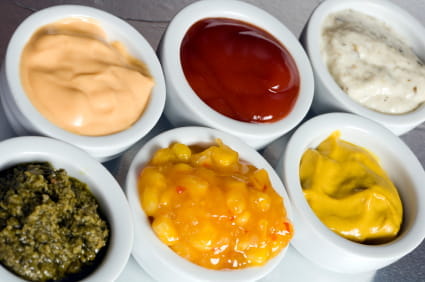
With processed refined soybean oil as the main ingredient in most mayos, there's NOTHING healthy about mayonnaise.  It causes internal inflammation and harms your omega-6 to omega-3 balance with excess omega-6 fats.   Tartar sauce has the same issues as mayo.  If you can find a mayo made with 100% olive oil instead of soybean oil, this would actually be a healthy choice.healthy or unhealthy condiments

Ketchup?  Not quite…

Yes, ketchup is made from tomatoes so it does contain the beneficial nutrient lycopene.  Unfortunately ketchup has a high % of sugar, and most brands are made with nasty high fructose corn syrup.  Not good.  Hey, I'm a ketchup lover myself, but I just try to keep the quantity small to minimize the sugar intake.

Barbeque Sauce?  Nope…

BBQ sauce is actually worse than ketchup because it has higher levels of sugar or HFCS and lower levels of actual tomato.  Strike 3 with BBQ sauce.

Salad Dressing?  Not most store brands…

As you know from this salad dressing article of mine, there's not much healthy about most store bought salad dressings…most contain HFCS and soybean oil or unhealthy canola oil as the main ingredients.

Most "fat-free" salad dressings are simply loaded with extra sugar.  Plus, remember that you need a good fat source to go with your salad to help absorb the vitamins and minerals in your veggies, so fat-free dressing is not a good option.  Even most salad dressing brands that claim to be "made with olive oil" only have small amounts of actual olive oil, while unhealthy soybean or canola oils are main oils used.  Instead, follow my healthy salad dressing recipe if you want a lean healthy body.

So, what are the top 5 healthiest condiments?

Below, I give you my top 5 picks for the healthiest condiments for a lean healthy body.  Sure, there might be a few others not on this list that are also healthy, but these are my top 5 picks:

1. Mustard

That's right… mustard is absolutely one of the healthiest condiments!  First, it has no added sugar.  Also, mustard seed itself is a source of powerful antioxidants.  In addition to the antioxidants in the mustard seed, most yellow mustards also contain turmeric (one of the healthiest anti-cancer spices) and paprika, which both contain powerful antioxidants as well!

2. Guacamole

I know, I know… when do I ever stop talking about avocados and guacamole.  Sorry, it's one of my favorite foods, and I eat avocados or guac just about every single day.  At this point, I don't think I need to explain why Gauc is healthy, as I think everybody knows this by now… but a quick recap:  lots of healthy fats (that satisfy your appetite and regulate hormone balance), lots of fiber, and plenty of vitamins, minerals, and antioxidants.

And creamy guac just makes anything taste better!  I put it on eggs, on burgers, on chicken or fish, or just eat it with veggie sticks.  If you buy pre-made guac from the store, just be sure to check the ingredients and make sure it doesn't have added trans fats or other artificial ingredients.  But it's so simple and fast to make fresh guac, I don't know why anybody would buy pre-made guac.

3. Salsa

Although ketchup was on the unhealthy list due to the sugar content, salsa makes the super healthy list as it almost never has added sugars if you get a good brand.  Salsa is mostly just vegetables so it's hard to go wrong.  I like it on my morning eggs for variety sometimes.  I also like to mix salsa half and half with guac for a delicious party treat!

And if you're a ketchup lover and want to reduce your sugar intake, just try salsa instead for a much healthier option.  Trust me… salsa on a burger is just as delicious as ketchup on a burger.

Just remember that the corn chips that people generally cram down their throats with salsa are NOT even close to healthy.  Corn chips are almost always fried in a heavily refined omega-6 oil such as corn or soy oil, and are inflammatory.  Plus, most corn used for corn chips is genetically modified.   Organic corn chips are a small step in the right direction (this ensures it's not GMO corn), but I'd still try to keep the quantity small if you're going to eat corn chips with salsa.

4. Hummus

Hummus is mostly just chickpeas, tahini, garlic, lemon, and olive oil, and is easily one of the healthiest condiments or as a separate snack by itself.

The main thing to look for when buying a good hummus is to make sure it's made with olive oil and NOT soybean or canola oil.  Unfortunately most brands use cheap soy or canola oil, but if you're a label reader, it's easy to find a brand that uses solely olive oil.

One of my favorite snacks is just veggie sticks with hummus.  However, hummus is also a delicious condiment to go with sandwiches, on top of meat dishes, etc.

5. Pesto

Pesto is generally a mashed mix of garlic, pine nuts, basil, olive oil, and grated cheese.  It's a great source of healthy fats and also powerful antioxidants, mostly from the garlic and basil, but to some extent from the pine nuts and olive oil too.

Pesto goes incredibly well with sandwiches, on meat dishes, or surprisingly, even on eggs.

There's one more condiment we didn't cover yet that you might be wondering about…

What about hot sauce?  Actually, hot sauce is fairly healthy.  Most hot sauces don't have added sugars.  And the hot peppers are actually good for you too and could even cause a slight and temporary metabolism increase.  The only drawback to most hot sauces is a moderately high sodium content.   But unless you go nuts with loads of hot sauce on every meal, the sodium content in hot sauce will not be an issue.

  5 Odd foods that KILL abdominal fat?

Source White Market

Top 6 Sources of Fitness Myths


Nearly everybody who's started out with the dream to get into shape, build muscle or lose fat, has fallen prey to some type of fitness myth. Many times, those myths come from sources and publications that we trust. Maybe it's false advertising that leads somebody to start a myth or the quest to get rich. Or maybe it's just simple ignorance.
The fitness industry is no exception. As with any commerce industry, there's the potential for myths that develop into frauds, dangerous exercises, worthless supplements or just incomplete information. If there is money to be made, you are guaranteed to find some popular fitness myths.
These 6 sources of myths, deception and fraud are not all inclusive. They are the top contenders for a variety of reasons which will be explained below.
The best way I know how to combat and avoid falling prey to any of these misconceptions and myths is to travel down the path of education.
It's far less costly to educate yourself (just learning from a variety of sources) than fall victim to ignorance and waste years and sometimes thousands of dollars on false information. Not to mention the frustration that myths can incur.
Fact is…
These 6 sources can be myth-makers or myth-busters!
1. Websites and Magazine Editors:
Without a doubt, magazines and websites can be a popular source of bodybuilding myths. Sometimes the story will just have it's facts wrong. Or it might be an editorial. Sometimes editors have to take an old story and put some popular spin on it to make it more interesting.
If something is published that is controversial (the recent Soy examples) it can be fuel for further research and studies but more often than not, people take a single article in a popular magazine or newspaper as fact.
There is a common belief that if it's in print… it must be right.
Am I right about that so far?
Pick up an issue of Cosmo, Us, People or look at back issues of most popular fitness magazines. How many times have you seen a new twist or angle put on the ever popular, "Arnold's Arm Routine."
It's part of life to re-create, re-package and enhance old stories. Just keep in mind that myths can start anywhere.
2. The "I Feel It" Syndrome:
Just because it worked for me, doesn't mean it works for you. This can apply to training programs or supplements. The "I Feel It Syndrome" simply doesn't take into account the Principle of Individual Differences. Everybody is slightly different. If a beginning builder happens to respond very well to some strange exercise (not taking into account they are new and will almost respond to anything) it doesn't make that exercise or routine one that will work for everybody.
I cannot tell you how many times I've personally heard people tell me that Creatine is a worthless supplement that simply doesn't work.
While it might not work for them (roughly 30% of the population does not respond to regular creatine products) there are over 300 peer reviewed and published studies that show many benefits of creatine and that it does work.
For starters, I'm going to take 300 journals with well researched documentation over "somebody" in the gym telling me it doesn't work.
3. The "Big Guy" Syndrome:
A younger bodybuilder might look up to the biggest guy in the gym, but without knowing how the big guy got big… it can be a real source of myths. How he or she got big might be 1) hard work and dedication 2) genetics 3) drugs 4) combination of all the suggested. The person asking simply doesn't really know how they got bigger and most likely it will be a combination of hard work and dedication along with some pseudo-scientific explanation of their training.
Reminds me of a story one person told me.
A very large bodybuilder was the envy of all the younger guys in the gym. They always wanted to know his "secrets." He never told them until one day, this young guy was pestering him.
"Do you really want to know the secret?" The Big Guy asked.
"Yes!" Said the young student.
"It's Alpo Dog food. Seriously. Something they put in there just builds muscle. I can't explain it." The Guru said.
[ 2 weeks pass ]
The younger guy see the big bodybuilder again and says, "You know I really don't like the taste. I just can't keep eating the stuff."
Now I can't tell you if this is true. It's probably a myth in itself. But it lends itself to proving a point that you can get a lot of myths from the biggest guy or gal in your gym. And over time, it can be pretty costly or foul tasting depending on the advice you receive.
4. Supplements Salespeople:
How many supplements have over 300 peer reviewed and published studies behind them from various sources? Not many. Supplement salespeople have a clear agenda to push their products. Which is fine expect you don't know what they are thinking, their agenda or if they have some quota to fill. Just keep in mind they may or may not know what they are talking about. Keeping yourself informed will help you make the right choices and help them direct you to what you want.
5. Equipment Salespeople:
Similar to the supplement salespeople, how many highly trained and fully qualified equipment sales people are fully aware of biomechanics and how exercises related to the body? Not a whole lot. You could get an entirely different story about muscle building from a Bowflex salesperson over a person at Sears who wants to sell you a weight stacked machine. You can easily fall prey to the machines vs. free weights myths right here.
6. Podcasters:
Heck, I'll put myself on the chopping block here. With the Internet being so popular and everybody having a microphone, all of us who podcast about fitness can spread myths or be a new source of a myth. Much like website or magazine editors, we want readers and listeners and might put new slants on old stories. Hopefully you will research things for yourself, get other opinions, check with your doctor if necessary and educate yourself so that you can make informed choices. Even my podcast is simply there to help you learn to love to learn.
Make no mistake… while this list isn't all inclusive of every possible sources of myths, they are the lead contributors. But that doesn't mean they are inherently bad or you need to avoid them.
In fact, the same sources can be the greatest contributors of myth-busting!
My point is…
Keep yourself informed and just be cautious.
I'm going to close this article out with a quote I think sums up falling prey to the fitness myths that you may encounter. "If you think education is expensive, try ignorance." - Derek Curtis Bok

For More Information Click Here

Source White Market

The Weakest Link

How to rebalance your body to ensure optimum health & output!

We sit 4 weeks after my last competition of the season and right in the mix of rebalancing all of my hormones and body systems.The approach I take each year after competing is to learn to balance everything that's going on in my body with the use of natural herbs and vitamins. Most people really have no idea the extent of the taxation a pro athlete puts on his or her body in a competitive season. Bodybuilders often seem to be so far behind other sports when it comes to stuff like healing the body, likely because we just don't have the same financial resources that the other mainstream sports do.
It can really get expensive if you want it to, but I've learned many ways to be cost effective; just learning to weigh the cost to benefit ratio really.

Bodybuilding tends to be a very ego driven sport. "I'm bigger than you, so I must know more than you do." I try to adopt the philosophy that there is something to be learned from every situation and every person we encounter. I like to look at myself first and foremost as an athlete. Every athlete has very specific needs and requirements to ensure optimal output. What exactly is it that allows other elite pro athletes compete at such a high level for so long and not burn out? Sure there are some that do burn out and get injured, but I chose to look specifically at the elite that are able to sustain an exceptionally high level of performance over a long period, or I look at the ones that are the absolute best in the world at what they do. They must be doing something differently, and I set out to find out what it is, and replicate it.

For me, it started out as baby steps. Learning what few factors I could change immediately and notice a quick response. The first thing I experimented with was supporting my adrenals. By using just a few herbs I noticed my energy was more consistent, my mood was more stable, my sleep was more sound, my body's responsiveness to just about anything I asked of it increased. For someone like myself, who loves to train, often more than once a day, my adrenals were certainly fatigued. I found myself having more than ample energy to complete multiple workouts on a daily basis without the need for stimulants after just a few days on proper adrenal support. Check out James Wilson's

The second thing I noticed was that my body wasn't using sugar as well as some people. A quick look at my blood work or my family history would verify my suspicions. Some dietary changes and workout manipulations and I noticed a significant difference within weeks. My energy was better. I found myself with a better ability to concentrate. Less likely to doze off at random times throughout the day. My strength in the gym went up and fullness increased dramatically. Something as simple as adding some lemon water into your diet in the morning or before each carb meal with significantly change your insulin utilization. My protocols tend to go into a lot more detail than this, but that's definitely a good quick tip!

One of the most commonly asked questions is, "how do I know where to start? " Or, "how do I know which of my bodily systems needs balancing or support?" I use a method of simply determining what I call my "weakest link"! What is it about my body that I feel holds me back from greatest gains? For me, if had always been a slight lack of energy upon entering the gym. Once I got going, I was fired up and ready to kill it. But often times I find myself walking into the gym thinking about a nap rather than this arm workout I was about to have. Is this normal? The answer is, yes it is! Apparently its very common. I traced this back to a mild case of "overtraining" and poor insulin utilization. For me, the weakest link changes every year and I've since taken on the mentality of simply addressing every body system to ensure optimum health and output. For More Information Click Here

Source White Market

Weight Training Exercises to Avoid if You Want to Build Muscle Fast

When it comes to constructing the ultimate weight training program to build muscle, exercise selection is a very important component. You build muscle fastest with compound weight training exercises. Any bodybuilding program that focuses on machines and isolation weight training exercises is a complete waste of time.

Below are the worst weight training exercises on the planet and should be avoided at all costs if you want to build muscle fast.

1) Smith Machine Squats- Squats are one of the best weight training exercise you can do in order to build muscle fast. Doing them on a Smith machine however, is a huge mistake. Squatting in a Smith machine is very hard on the knees and causes the lifter to develop what is known as a pattern overload syndrome. The smith machine isolates the legs while taking the trunk out of the movement. In a normal free weight squat your lower back and abs must stabilize the weight and every muscle group must work in unison. This is how the body functions, as a unit, never in isolation. This can lead to severe imbalances and injuries.

2) Leg Extensions- Compound weight training exercises are the best muscle building exercises there are. Leg extensions are an isolation movement which do very little to build muscle. This movement also creates shearing forces on the knee and should be avoided at all costs.

3) Abduction/ Adduction machines- This is the one where you sit with your legs spread and strapped into the machine. You perform this weight training exercise by opening up or spreading your legs and then closing them. This is another isolation movement which will do nothing to build muscle. On top of that, you will look like a girl if you do it.

4) Abdominal Crunch Machines- The abs never work in isolation in the real world. In fact, the abs do not ever contract consciously. They contract unconsciously as a way to protect the spine. The abdominal muscles never work without the use of the hip flexors yet these isolation crunch machines are specifically designed to take the hip flexors out of the movement. For these reasons, this is a very ineffective weight training exercise for building muscle.

5) Ab Roller Devices- This apparatus is a version of the aforementioned crunch machines and is another useless piece of equipment. This device takes the neck completely out of the movement which is exactly what you don't want to do. Contracting and or flexing the muscles of the neck during an abdominal crunch is exactly what you want to be doing and is physiologically correct. Another waste of time in the quest to build muscle fast.

6) Smith Machine Bench Press- The bench press is a great muscle building exercise but doing it in the Smith machine is not a good idea. Much like the Smith Machine Squat, this exercise will cause you to develop a pattern overload and will lead to injury. Pressing on the Smith Machine isolates the pressing muscles and completely eliminates the use of the stabilizer muscles, such as the rotator cuff. This will lead to imbalances that can transfer to serious shoulder injuries. You can't build muscle when you are injured.

7) Bench Dips- This is another weight training exercise that I did for many years and now regret. I routinely did this exercise with four 45 pound plates on my lap. Little did I realize at the time that bench dips put your shoulder in a very dangerous position and can eventually lead to serious problems. While this exercise is useful in building muscle it is also dangerous. If shoulder safety is a concern I recommend that you avoid this exercise and stick with parallel bar dips for building muscle.

8) Concentration Curls- When it comes to weight training and building muscle, everybody's favorite bodypart is biceps. Chin ups and barbell curls are the best weigth training exercises for building huge biceps. Concentration curls are not. This is a pure isolation movement which supposedly puts a "peak" on your biceps. The only problem with that is the fact that it is physiologically impossible to peak your biceps. Muscles grow evenly along the entire length of the tissue from origin to insertion. When looking at the effectiveness of an exercise one of the key determinants in the results that it may produce is the amount of weight that can be lifted. In a concentration curl it is very difficult to lift a great deal of weight and thus it renders the movement ineffective. If you want to build huge biceps, avoid concentration calls.
9) Bench Press to the Neck- This was a big favorite muscle building exercise of Larry Scott and Vince Gironda. It was supposedly a great muscle building exercise for the upper or clavicular pectoral muscles. The problem with this movement is that it will absolutely destroy the shoulders and can easily lead to a pec tear. This is one movement that you should stay very far away from in your quest to build muscle fast.Animated Banner

10) Old School Pec Dec-This is the supposed muscle building exercise machine which has you bend your arms ninety degrees while externally rotating. You place your arms on the pads and then proceed to bring the pads together in front of your body. This is not only dangerous for the shoulder but is absolutely useless and will not build muscle at all.

11) Knee Break Squats- As mentioned earlier, the squat is the best weight training exercise there is for building muscle. Some trainers and coaches have advocated initiating a squat by first breaking at the knees rather than the hips in an effort to put more stress on the quadriceps muscles. The problem is that this also puts unnecessary stress on the knees and severely limits the amount of weight that can be lifted. Squats should be initiated by first breaking at the hips and sitting back and down, not by breaking at the knees and pushing your knees forward as you descend.

These weight training exercises are listed in no particular order. Unfortunately there are many other weight training exercises that are performed on a routine basis by many lifters that are also useless and dangerous. Those listed above just so happen to be the worst. If a weight training exercise causes pain, you should always avoid it. If a weight training exercise is supposed to target a certain muscle group in isolation and requires you to use extremely light weights it is usually best avoided. The exception to this rule would be prehab and rehab type exercises such as external rotation exercises for the rotator cuff.

Train hard, train smart and focus on the big, basic, compound weight training exercises and you will build muscle fast.

More Information About Muscle Building Click Here

Source White Market

What Really Happens When Body Fat is Burned?

Earlier this week someone in our discussion forum wrote, "I haven't "LOST" any fat… I know EXACTLY where it went! I got a chuckle out of that because I "got" the joke, but truth is, most people really don't know how fat cells work, how the fat burning process takes place or where the fat goes when it's burned. It's actually quite a complex biochemical process, but I'll explain it as simply as possible, so by the end of this article, you'll be a "fat burning" expert!

When you "lose" body fat, the fat cell (also called an adipocyte) does not go anywhere or "move into the muscle cell to be burned. The fat cell itself, (unfortunately) stays right where it was – under the skin in your thighs, stomach, hips, arms, etc., and on top of the muscles – which is why you can't see muscle "definition" when your body fat is high.

Fat is stored inside the fat cell in the form of triaglycerol. The fat is not burned right there in the fat cell, it must be liberated from the fat cell through somewhat complex hormonal/enzymatic pathways. When stimulated to do so, the fat cell simply releases its contents (triaglycerol) into the bloodstream as free fatty acids (FFA's), and they are transported through the blood to the tissues where the energy is needed.

A typical young male adult stores about 60,000 to 100,000 calories of energy in body fat cells. What triggers the release of all these stored fatty acids from the fat cell? Simple: When your body needs energy because you're consuming fewer calories than you are burning (an energy deficit), then your body releases hormones and enzymes that signal your fat cells to release your fat reserves instead of keeping them in storage.

For stored fat to be liberated from the fat cell, hydrolysis (lipolysis or fat breakdown), splits the molecule of triaglycerol into glycerol and three fatty acids. An important enzyme called hormone sensitive lipase (HSL) is the catalyst for this reaction. The stored fat (energy) gets released into the bloodstream as FFA's and they are shuttled off to the muscles where the energy is needed. As blood flow increases to the active muscles, more FFA's are delivered to the muscles that need them.

An important enzyme called lipoprotein lipase (LPL), then helps the FFA's get inside the mitochondria of the muscle cell, where the FFA's can be burned for energy. If you've ever taken a biology class, then you've probably heard of the mitochondria. This is the "cellular powerhouse" where energy production takes place and this is where the FFA's go to be burned for energy.Success Story!

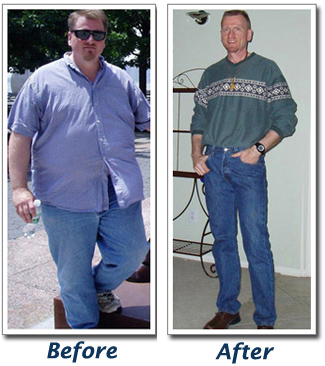
When the FFA's are released from the fat cell, the fat cell shrinks and that's why you look leaner when you lose body fat – because the fat cell is now smaller. A small or "empty" fat cell is what you're after if you want the lean, defined look.

It was once believed that the number of fat cells could not increase after adulthood, only the size of the fat cells could increase (or decrease). We now know that fat cells can indeed increase both in size (hypertrophy) and in number (hyperplasia) and that they are more likely to increase in number at certain times and under certain circumstances, such as 1) during late childhood and early puberty, 2) During pregnancy, and 3) During adulthood when extreme amounts of weight are gained

Some people are genetically predisposed to have more fat cells than others and women have more fat cells than men. An infant usually has about 5 – 6 billion fat cells. This number increases during early childhood and puberty, and a healthy adult with normal body composition has about 25 to 30 billion fat cells. A typical overweight adult has around 75 billion fat cells. But in the case of severe obesity, this number can be as high as 250 to 300 billion!

The average size (weight) of an adult fat cell is about 0.6 micrograms, but they can vary in size from 0.2 micograms to 0.9 micrograms. An overweight person's fat cells can be up to three times larger than a person with ideal body composition.

Remember, body fat is basically just a reserve source of energy and fat cells are the like the storage tanks. Unlike a gas tank in your car which is fixed in size, however, fat cells can expand or shrink in size depending on how "filled" they are.

Picture a balloon that is not inflated: It's tiny when not filled with air – maybe the size of your thumb. When you blow it up with air, it can expand 10 or 12 times it's normal size, because it simply fills up. That's what happens to fat cells: They start as nearly empty fat storage "tanks" (when you are lean), and when energy intake exceeds your needs, your fat cells "fill up" and "stretch out" like balloons filling up with jelly (not a pretty picture, is it?)

So you don't actually "lose" fat cells, you "shrink" or "empty out" fat cells.

Take-home lessons:

1. Calories count!The signal that triggers your body to release adipose from fat cells is an energy deficit… you have to burn more than you eat.

2. Cut calories conservatively. Starving yourself may cause quick weightloss at first, but never works long term because it actually decreases the activity of fat burning enzymes that release fat from the cells. to avoid this "starvation mode" use exercise to BURN THE FAT, not very low calorie crash diets.

3. Get control of your weight now. If you are gaining weight, and especially if your weight is climbing upwards out of control, make a decision to STOP RIGHT NOW. Your fat cells might be multiplying, making it more difficult to burn fat in the future. NOW is the time!

4. If you've already lost weight, you must be forever diligent. Your fat cells are not gone, they have merely "shrunk" or "emptied out." Fitness is not a 12 week program, its a lifestyle. To stay lean you have to eat clean and stay active

5. Genetics are only a minor factor. You may not have control over how many fat cells you were born with, but you do control the major factors that determine how much fat you store: lifestyle, exercise, nutrition, mental attitude.

Genetics are not an excuse. The past is not an excuse. Your present condition is not an excuse. You can either make excuses or get results, but you can't do both.

So keep educating yourself about the science, read these newsletters, take action every day and go out there and make it happen!

If you need more help, Burn The Fat is the eating plan that turned it all around for thousands of others… why not you? visit:<<< Watch This Amazing Video For More Information >>>

Source White Market